Home Booster Pumps: When You Need One and How to Choose

In many homes and villas the water reaches the tank without any problem, yet it leaves the tap weak, and the water heater cuts out whenever another tap is opened. The cause is usually not a shortage of water but a shortage of pressure. A booster pump is the engineering answer, but it only works well when it is selected from a calculation rather than from whatever is on the shelf.
When do you actually need a booster pump?
Before buying any pump, confirm the problem is pressure and not a blockage. The following signs point to genuine low pressure:
Clearly weak flow on upper floors while the ground floor is normal.
Flow drops whenever more than one outlet is opened at the same time.
The instant water heater cuts out or its temperature fluctuates during a shower.
Devices that need a minimum pressure, such as some filtration systems and rain showers, fail to operate.
If the weakness is at a single point only, it is more likely a clogged filter, a half-closed valve, or scale in the line. Installing a pump there hides the fault instead of fixing it.
Sizing before buying: head and flow
Pump selection rests on two numbers: the required pressure and the required flow. Pressure is derived from the height difference between the tank and the highest outlet, plus friction losses in pipes and fittings, plus the pressure needed at the outlet itself. Flow is derived from the number of outlets expected to run simultaneously, not from the total number of outlets.
Measure the height of the highest outlet above the pump.
Add friction losses in the pipework, which grow as the run gets longer and the diameter smaller.
Set a realistic simultaneous-use figure instead of adding up every water point.
Leave room for future expansion without oversizing the pump out of its efficiency range.
An oversized pump is not a safer choice: it draws more electricity, causes noise and water hammer in the pipework, and wears out fittings and mixers over time.
Types of booster pumps
Fixed-speed pump with a pressure tank: simplest and cheapest, suitable for small homes, but pressure swings between the cut-in and cut-out settings.
Variable-frequency-drive pump: changes speed with demand to hold a steady pressure, quieter and more efficient, and better suited to multi-storey villas.
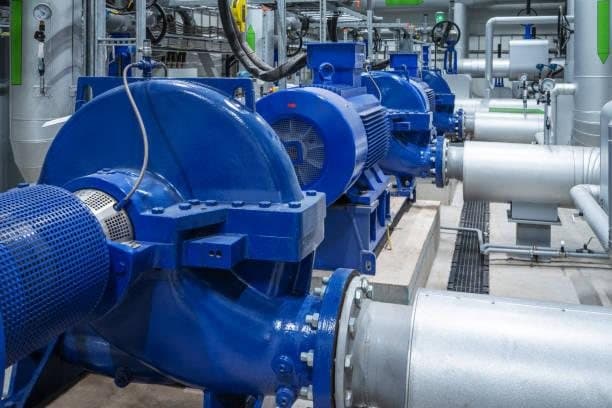
Multi-pump booster set: for large buildings and compounds, the pumps alternate to spread running hours and keep service running if one unit fails.
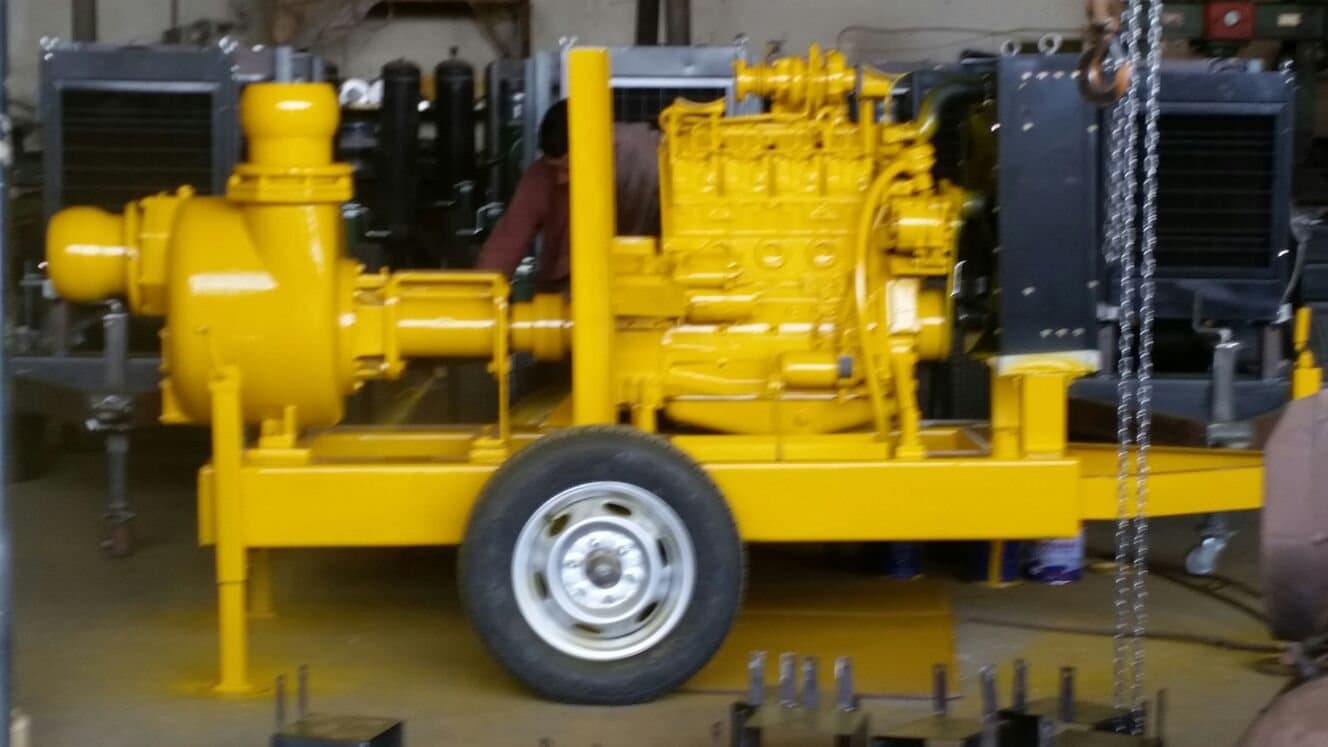
MEIC manufactures and assembles pumping sets in its own workshop, so the panel, controls and connections are built around the building data instead of fitting a ready-made set that may not match it.
Common installation mistakes
Drawing the pump directly from the city main, which is not permitted and harms neighbours; the correct source is a tank.
Installing the pump without dry-run protection, so it burns out when the tank empties.
Omitting the non-return valve, so water flows back and the pump cycles needlessly.
Mounting the pump on a base with no vibration isolation, so noise travels through the whole building.
Using pipe diameters smaller than the pump outlet, wasting part of the pressure you paid for.
Operation and maintenance
After installation, set the pressure tank pre-charge to the manufacturer figure and watch the number of starts per hour: frequent cycling means the tank has lost its charge or is undersized. Check electrical connections and motor temperature regularly, and clean the suction filter. Planned preventive maintenance costs far less than replacing a burnt pump at the peak of summer.
Read also
Need a water pressure assessment for your property or a properly sized booster set? Contact Middle East Asas Contracting on WhatsApp 0554097005 and get a quotation within 24 hours.