Facility Management KPIs You Should Track
Facility management KPIs are contract-agreed measures that express operation and maintenance quality in numbers rather than impressions. The essential ones are response time, repair time, preventive maintenance completion, critical asset availability, fault recurrence, safety compliance and user satisfaction. Reviewing them monthly exposes problems early and turns the contract into measurable results.
What is a KPI in a facilities contract?
A KPI measures one aspect of the service over a defined period. Unlike a general description, it can be reviewed: instead of "fast maintenance" you have a defined response time per priority level and an agreed way of calculating it.
KPIs are best written in a separate contract annex stating, for each one: its definition, its data source, its measurement cycle, the agreed target, and the contractual consequence of missing it.
The core KPIs to track
Response time: the time between logging a ticket and the technician reaching the site. Measure it per priority level, because a fault that halts the building is not judged by the same yardstick as a failed lamp.
Repair time: from starting work until service is restored. Keeping it separate from response time matters, because a team can arrive quickly then wait on a spare part.
Preventive maintenance completion: planned preventive visits carried out on schedule. A drop is an early warning that unplanned breakdowns will rise.
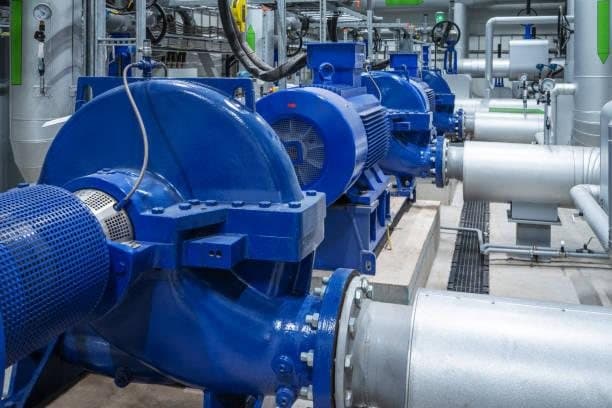
Critical asset availability: the share of time an asset is fit to operate. Apply it to what your activity depends on: lifts, generators, pumps and main HVAC units.
Fault recurrence: how often the same asset fails within the period. A fault that returns after repair means the root cause was never reached.
Safety compliance: work permits, isolation procedures, protective equipment and timely closure of observations. This one allows no trade-off, however good the other numbers look.
User satisfaction: a short rating after a ticket is closed. It exposes the gap between a ticket closed in the system and service the user actually felt.
First-visit resolution: the share of tickets solved without a second visit, measuring technician readiness and spare-part availability.
Reading the KPIs together
Reading each KPI in isolation produces wrong decisions. They should be read as one picture:
Excellent response time with frequent recurring faults: fast arrival, weak root-cause work.
High preventive completion with low availability: the preventive plan is not covering the right assets.
Good numbers with low satisfaction: the weakness is usually communication and keeping users informed.
This is why KPIs are best reviewed in a single meeting attended by both the operator and the building manager: a figure that looks weak on paper may result from a constraint outside the maintenance team's control, such as a delayed purchase approval or no access to a leased area.
Common mistakes when setting KPIs
So many KPIs that nobody follows them; start with a limited set covering safety, availability and response.
No shared definition: when does the clock start and stop? Differing definitions drain the KPI of meaning.
Relying on manually recorded figures; they are better drawn from a single ticketing system both parties can see.
Skipping the escalation clause, which turns a missed KPI into a number for display only.
Ignoring seasonality, since summer cooling loads differ from winter and targets should reflect that.
What makes a monthly report useful?
A good report does not just display numbers; it explains them and proposes an action:
A one-page summary: KPI, target, result, and trend against the previous month.
The assets consuming the most maintenance hours, with the reason why.
Tickets that exceeded the agreed time, and the cause of the overrun.
A corrective plan for every deviation, each with an owner and a closing date.
At MEIC we work with over 20 years of experience and more than 500 projects, under ISO 9001, 14001 and 45001 certified management systems, with a 12-month warranty on our work. We build a KPI dashboard with every maintenance and operation contract and review it with you regularly.
Frequently asked questions
How many KPIs do I need in a maintenance contract?
A limited set covering safety, availability, response, preventive maintenance and user satisfaction beats a long list. Start with what you can measure accurately today, then expand once the data settles, because a KPI with no reliable data source undermines the credibility of the whole dashboard.
Can KPIs be changed after the contract is signed?
Yes, through a periodic review written into the contract. Reviewing targets after the first months of operation is practical, because a building's real data usually differs from initial estimates.
Who records the figures, us or the service provider?
Both parties are best recording into a single ticketing system the owner can access, so the monthly discussion does not turn into a comparison of two different spreadsheets.
What is the difference between a KPI and a penalty clause?
The KPI measures; the penalty clause is the contractual consequence of repeated failure. A KPI without consequence changes no behaviour, and a consequence without fair measurement damages the relationship.
My facility is small — are KPIs still worth it?
Yes, in a simplified form: response time, preventive maintenance completion, and critical asset availability. Three KPIs followed consistently beat ten that are ignored.
Read also
To discuss the right KPIs for your facility and build a clear tracking dashboard, message us on WhatsApp and our facility management team will get back to you.